
Describe a Song: IELTS Speaking Part 2-Style Practice with the True Story of "Mbube" and Solomon Linda
For "describe a song", choose one with a story you can tell. "The Lion Sleeps Tonight" grew from "Mbube", which South African singer Solomon Linda improvised in a Johannesburg studio in 1939. He signed away his worldwide copyright for 10 shillings, and only a 2006 settlement acknowledged him as co-composer.
Updated · 3 sources · How we work
SoulfulStories is an independent speaking-practice tool. It is not affiliated with, endorsed by or connected to IELTS, the British Council, IDP: IELTS or Cambridge University Press & Assessment. IELTS is a trademark of its respective owners. Our feedback is practice feedback, not an IELTS score or band.
What do examiners expect when you describe a song?
Not a review — a history and a feeling. The card's points ask what the song is, who created it, what happened to it, and how you feel about it now. That is a biography with a final personal note, which is why a song with a documented past beats a vague favourite. Here is the practice card, our own wording:
Describe a song that has an interesting story behind it.
You should say:
- what the song is
- who first created it
- what happened to it over time
and explain how you feel about the song now.
The song is "Mbube" — the song behind The Lion Sleeps Tonight. Read the story first; don't quote lyrics beyond the single word "wimoweh".
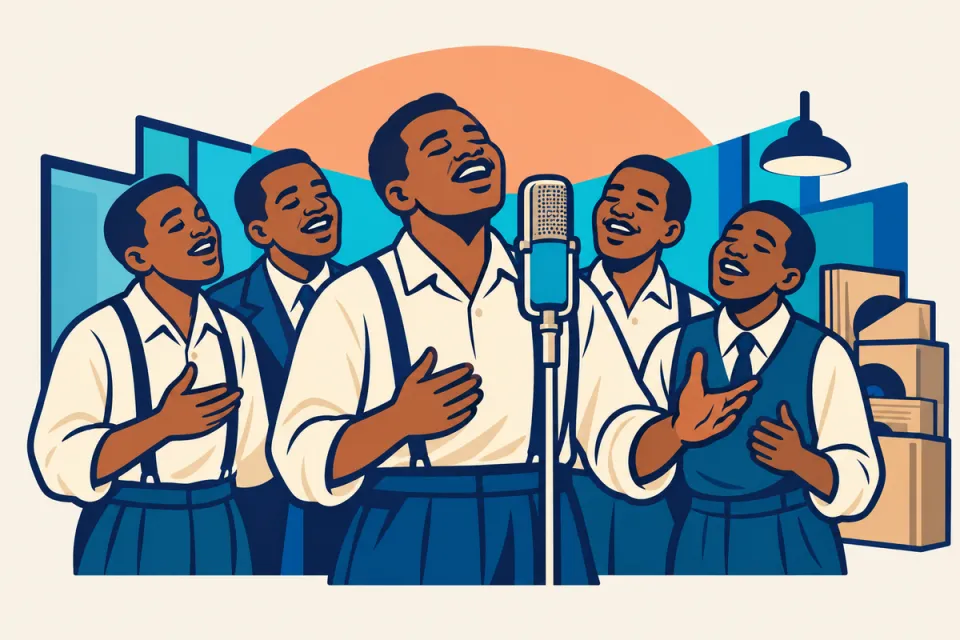
Facts you’ll need — each one is checked, with its source, on the story page:
- "Mbube" is Zulu for lion; improvised by Solomon Linda in 1939 in Johannesburg's first recording studio
- Linda worked as a record packer at Gallo; the Evening Birds were noticed by a talent scout
- On the third take he found the famous melody
- He assigned his worldwide copyright to Gallo for 10 shillings; a court later deemed the deal unfair
- Pete Seeger misheard the chorus as "wimoweh"; the Weavers released their version in December 1951
- 1961: the Tokens' "The Lion Sleeps Tonight" reached No. 1; Linda again got no credit
- Linda died in 1962; his family could not afford a tombstone
- Rian Malan's Rolling Stone article; the 1911 Imperial Copyright Act; some 200 Disney trademarks attached
- A settlement before the February 2006 trial acknowledged Linda as co-composer; by some estimates over $15 million in royalties
Can you describe a song you don't listen to often?
Yes — the card asks for a song with a story, and "I heard it in a film, then read what happened to the man who wrote it" is a perfectly honest frame. The Lion King connection (1994) is on the story page, so your "where you heard it" point is easy to make true.
How do you tell the story of "Mbube" in two minutes?
Origin, loss, justice, feeling. One word per point in the preparation minute:
- Opener (~35 words)"The Lion Sleeps Tonight" — a tune most people know. Your part: where you heard it first (for many, Disney's The Lion King in 1994).
- Origin (~70 words)In 1939 Solomon Linda was working as a record packer at the Gallo plant, and his group, the Evening Birds, had been noticed by a talent scout. In Johannesburg's first recording studio he improvised "Mbube" — Zulu for lion — and on the third take found the melody that became famous.
- Loss (~70 words)He assigned his worldwide copyright to Gallo for 10 shillings. A court would later deem the deal unfair: Linda could not read and had no understanding of royalties. Pete Seeger transcribed the record, mishearing the chorus as "wimoweh"; the Weavers' version came out in 1951, and in 1961 the Tokens' "The Lion Sleeps Tonight" reached number one. Linda got no credit.
- Justice (~65 words)He died in 1962, and his family could not afford a tombstone. After Rian Malan's late-1990s Rolling Stone article, the family's lawyers relied on the 1911 Imperial Copyright Act and attached some 200 Disney trademarks in South Africa as security. A settlement just before the 2006 trial acknowledged Linda as co-composer and gave his heirs royalties.
- Explain (~50 words)By some estimates the song earned over $15 million in composer royalties. Your part: how the song sounds to you now that you know — a happy tune with a hard history.
About 221 words in total — 1:28 to 1:46 spoken at 125–150 words per minute.
| Card point | Your note |
|---|---|
| what the song is | Mbube |
| who first created it | Linda, 1939 |
| what happened to it over time | 10 shillings |
| and explain how you feel about the song now | settled 2006 |
One word per point, written in the preparation minute — never a sentence you could recite by accident.
At a calm pace the outline fills about two minutes — check the maths for your own speed with the speaking rate test.
Which music words help in Part 2?
Improvise, melody, copyright, royalties, credit, settlement, cover version. The first two are music words, the rest are law words — the story needs both, and so does the card, because "what happened to it over time" is a business question. Keep the hedges: "by some estimates, over $15 million" is accurate; a bare number would not be.
What do examiners listen for?
The four criteria are the ones in the public band descriptors. What the app can measure is narrower, and it never produces a score or band for any of them:
- Fluency and coherence
- Keep the chronology clean — first, then, decades later — and give each era its own two sentences.SoulfulStories measures: your pace, your pauses and your filler words — how long you keep the floor and how your answer is organised.
- Lexical resource
- Improvise, melody, copyright, royalties, credit, settlement, cover version — the music-business words this card was built for.SoulfulStories measures: the CEFR level of the words you used, and where you rephrased around a missing word.
- Grammatical range and accuracy
- Passives (was recorded, was released) and concession (even though it reached number one, he…) carry the range here.SoulfulStories measures: nothing — grammar is not measured, because a transcript-based check would be guesswork; the examiner on test day judges it.
- Pronunciation
- "Mbube" — practise it slowly first, then say it confidently; and keep "wimoweh" light, as a chorus.SoulfulStories measures: nothing automatic today — pitch and volume variation are measured, but clear pronunciation is yours to hear in the playback.
How do you explain your feelings about a song?
Change the tense of the feeling: "I hummed it as a kid; now I hear two songs at once." The final point rewards a shift — knowing the story changed how the tune sounds. That same closing move works on sibling cards:
- Describe a painting or work of art you know aboutAnother artwork whose value — and authorship — took decades to be recognised.
- Describe an interesting true story you heard or readIf the card turns narrative, tell the ten-shilling song as a story you read.
The Part 2 practice page has the full method, and what story retelling is explains why a song's history works like any other story.
How do you practise this answer out loud?
Read the story, close the page, write your four words, and record two minutes. The report shows pace, fillers, pauses and fact coverage — measurements, not a score, as the methodology documents. Then retell it tomorrow: the 2006 ending lands better once you stop chasing it.
Tell the story of the ten-shilling song in two minutes.
Feedback on your pace, filler words, pauses, which key facts you covered, and the CEFR level of your vocabulary. Free to try, no card — and no score or band.
Questions and answers
Who wrote 'The Lion Sleeps Tonight'?
It derives from 'Mbube', improvised by South African singer Solomon Linda in 1939. A 2006 settlement acknowledged him as a co-composer of 'The Lion Sleeps Tonight'.
Do I have to describe my favourite song?
Only if the card says so. If it asks for a song with a story, or one you know well, a well-known song with a clear history gives you plenty to say.
How can I make a song answer last two minutes?
Tell where the song came from, what happened to it, and how you feel about it. A story with a beginning, middle and end fills the time naturally.
Is SoulfulStories an IELTS product?
No. It is independent practice, not affiliated with or endorsed by IELTS, the British Council, IDP or Cambridge.
Sources
Every outside fact on this page comes from the story’s cited sources, listed with their accessed dates on the story page.
- Solomon Linda — Wikipedia · accessed 25 October 2026
- Copyright in the Courts: The Return of the Lion — WIPO Magazine · accessed 25 October 2026
- IELTS Academic: Speaking test format — ielts.org · accessed 1 November 2026
Keep going
- IELTS Speaking Part 2 cue cardsPart 2-style practice cue cards backed by true, sourced stories, with a one-minute note grid and a model outline.
- IELTS Speaking Part 2 Practice: The Long Turn AloneA free, repeatable loop for the long turn: one minute of notes, two recorded minutes, one listen, one fix — with a worked cue card taken three ways.
- What Is Story Retelling? Meaning, Steps and ExamplesWhat retelling actually is for adults and English learners, how it differs from a summary or a paraphrase, and why it builds speaking fluency.
- Words per minute speaking testRead a 150-word passage aloud, time yourself and see your reading pace in words per minute.
- The Lion's Melody, Sold for Ten ShillingsA Zulu singer improvised a melody that circled the world, sold it for ten shillings, and died too poor for a tombstone.
IELTS is a registered trademark of its owners. SoulfulStories is not affiliated with, endorsed by or connected to IELTS, the British Council, IDP or Cambridge. We don't give band scores.