
How to Practise a Speech Alone: A 12-Minute Loop
Rehearse in short recorded takes, not whole run-throughs: one section, one listen, one fix, repeat. Twelve minutes is enough for four takes. Long sessions hide the errors inside the fatigue, and a mirror tells you nothing you can check afterwards.
Updated · Reviewed by the SoulfulStories editorial team · How we work
Why do full run-throughs work less well than they feel?
Because a run-through rehearses the whole speech at the level of the whole speech. Errors blur into the flow: you notice the total went "okay" and miss the three specific things that cost you. A short take isolates one section, so the same section gets heard four times in twelve minutes and each problem gets its own fix.
This is why recording beats feeling. HBR's advice for presenters is to record practice and play it back — playback is the only feedback channel that survives past the moment of speaking.
What do you need?
A recorder (your phone), a timer, and one section of the speech. Nothing else. A mirror is optional — it helps with posture and nothing else, because it cannot show you a lost fact or a rushed ending. A camera is not needed for the first week; audio is enough and less distracting.
The twelve-minute loop
The loop, four times:
- 30 seconds — choose the section and the one fix you carried over.
- 90 seconds — take it, out loud, recorded, standing if the real event is standing.
- 60 seconds — listen once. Do not rewind.
- 30 seconds — write one fix. One. If the take was clean, write "none".
That is 4 minutes per cycle; three cycles plus a fourth take lands at twelve. Stop at twelve minutes even if it is going badly — the bad session's fix becomes the good session's first line. Keep an eye on pace while you take: how fast the take should be gives targets by situation, roughly 120–150 wpm for anything with a listener.
Two rules hold the loop together. First, one fix per take — a take with three fixes rehearsed three ways is three half-fixes. Second, write the fix down; a fix held in your head while you listen to the next take is a fix you will lose. The sheet at the bottom of this page is what a session produces: four lines, one per take.
Try it: Tonight, do one loop on the opening of any story — four minutes, one take, one listen, one fix. That is the whole habit; everything else is repetition.
What are the four things to listen for?
In order, one per take:
- A lost fact — a name, number or order that didn't survive the telling. Facts are the foundation; a wrong fact poisons everything built on it. Check the take against the source, not against your memory of the source.
- A rushed ending — the last sentence arriving at double speed. Almost everyone does this; the ending is where nerves show. The fix is mechanical: a breath before the last line, taken on purpose.
- A filler cluster — not a single um, but three in a row. Count them afterwards if you want the number: count the fillers in a transcript, or see how to stop saying um for the fixes.
- A flat opening — the first line delivered at zero energy, because you were still warming up. The fix is a louder, slower first sentence than feels necessary.
The order matters: facts before delivery, delivery before polish. There is no point fixing the energy of a take that got the story wrong. More on what the ear should catch in a story is in how to tell a story out loud.
How do you rehearse the opening and the ending?
Separately, and more than the middle. They are the two parts an audience remembers and the two you get exactly one shot at — the opening buys the next thirty seconds of attention, and the ending is the part still in the room when you stop talking. Run the opening as its own 90-second take and the ending as another, on different days if the session is short. The middle can be rehearsed in blocks; the bookends should be over-learned.
Over-learned means you could say them half-asleep. The test: say the opening line while doing something else — walking to the kitchen, washing up. If it survives distraction, it will survive nerves. If it only works when you concentrate, it is not learned yet; it is merely familiar.
What do you do about an audience?
Week one: none. Week two: one person, or a recording sent to a friend. Practising in front of someone is a different skill — managing a listener's face, holding attention in real time, recovering when they look confused — and it should be added to the solo work, not substituted for it. The solo loop builds the speech; the listener pass builds the nerve.
If you have no one available, retell to a recording and treat the playback as the listener — the report can't nod at you, but it will not get bored either. A friend with a phone and two minutes of patience does the same job in week two.
How do you stop the recording making you worse?
The first three sessions are self-conscious — your voice sounds wrong, every um is enormous, and it is tempting to quit. That passes; say so to yourself in advance. Two rules help: listen to each take exactly once, and never listen to a take to feel bad about it — only to collect the one fix.
The one-fix rule is doing more work than it looks like. It forces every listen to end in a decision, and it keeps the takes comparable: take 4 differs from take 1 in four specific, written ways, which is what progress feels like. "It got better" is not a fix; "names the beach before the man" is.
When should you stop rehearsing?
When two takes in a row need no fix. That is the stopping condition, written down so you actually use it. Further rehearsal after that tends to flatten delivery — the words go smooth and the life goes out of them. Say the section once more on the day, cold, and leave it alone until then.
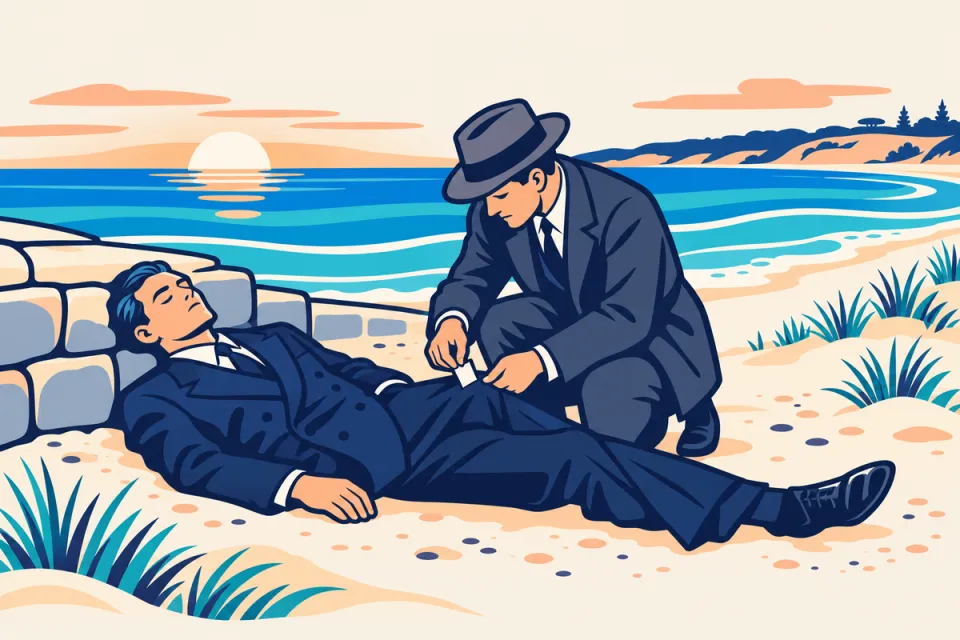
A filled-in session sheet
Here is one real section: the opening of the story of the Somerton man, quoted from the story's text:
In December 1948, on a beach in Adelaide, Australia, people found the body of a man. He was dressed in a brown suit. Every label had been cut out of his clothes. He had no name, no wallet and no papers.
The sheet, filled in across one twelve-minute session:
| Take | Fix written | What changed |
|---|---|---|
| 1 | "lost the beach detail" | take 2 names the beach before the man |
| 2 | "rushed the last line" | take 3 pauses before it |
| 3 | "three ums in the first sentence" | take 4 starts on a full stop |
| 4 | none | stop |
Take 4 is not perfect. It is unfixed — nothing new enough to write down — and that is the stopping condition from the last section, not a claim of flawlessness. Note the sheet itself is four lines and takes less time to fill than the take does to record; if your practice produces no sheet, it produced no fixes.
The same loop scales to a work talk, a wedding toast, or an exam long turn: pick the section, take it, listen once, write one fix. What changes between settings is only the target rate and the length of the sections. If you would rather have the fix line filled in for you — fillers, pauses, pace over time, and whether the facts survived — that is what the report measures. The loop above is what builds the skill; the report just fills in the fix line.
Questions and answers
Is practising in a mirror useful?
A little, for posture. It cannot show you a lost fact.
Should I record video?
Not in week one. Audio is enough and less distracting.
How many times should I run the whole speech?
Twice before the day, once on the day. The section work does the rest.
What if I only have five minutes?
One take, one listen, one fix. The loop scales down; the order does not.
Sources
Every outside fact on this page comes from one of these pages. The accessed date is when we last read it.
- Record Yourself Practicing Ahead of Your Next Presentation — Harvard Business Review · accessed 26 October 2026
- Tamam Shud: The Man With No Name (Somerton Man story facts) — Wikipedia · accessed 26 October 2026
- Mystery of Somerton man's identity solved after 73 years — The Guardian · accessed 26 October 2026
Keep going
- How to Tell a Story Out Loud: Voice, Pace, PausesDelivery for spoken stories — openings, pace, the three pauses — with the same opening told three ways and timed, so you can hear the difference.
- How to Stop Saying Um: 6 Fixes That Actually WorkSix fixes that work out loud, a marked transcript with the arithmetic shown, and an honest answer on when fillers help.
- How Fast Should You Speak? WPM Targets by SituationWPM targets by situation — talk, story, exam, call — with a worked example of what the extra minute buys, and one sourced number for the average.
- Filler word counterPaste a transcript, see every um and you know highlighted, and get a rate per 100 words.
Retell it aloud — free
The report gives you the four things to listen for without a second listen.
Written by the SoulfulStories editorial team. Reviewed 26 October 2026. How we work.