
The Mailman Who Napped Mid-Marathon
The Mailman Who Napped Mid-Marathon
1904St. Louis, United States and CubaSports & games
In 1904 a broke Cuban mailman hitchhiked to the Olympics, ate rotten apples mid-race, took a nap, and still came fourth.
Reading level
The same true story, told at three lengths. Pick one to read, close your eyes, and tell it back in your own words.
209 words · about 1 min to read · retell it in about 2 minutes
In 1904, a Cuban mailman named Félix Carvajal decided to run the Olympic marathon in St. Louis, in the United States. At home he was famous for walking and running huge distances. He once crossed the whole length of Cuba on foot.
On the way to St. Louis, he stopped in New Orleans. There, he lost all his money gambling. So he hitchhiked and walked the rest of the way.
He arrived just before the start, in his street clothes. He had nothing else to wear. So he cut the legs of his long trousers short to make shorts.
The race was hot and dusty. Carvajal ran well, but he kept stopping to chat with the people watching. He had not eaten for forty hours. When he saw people in a car eating peaches, he asked for one. They said no, so he playfully grabbed two and ran off.
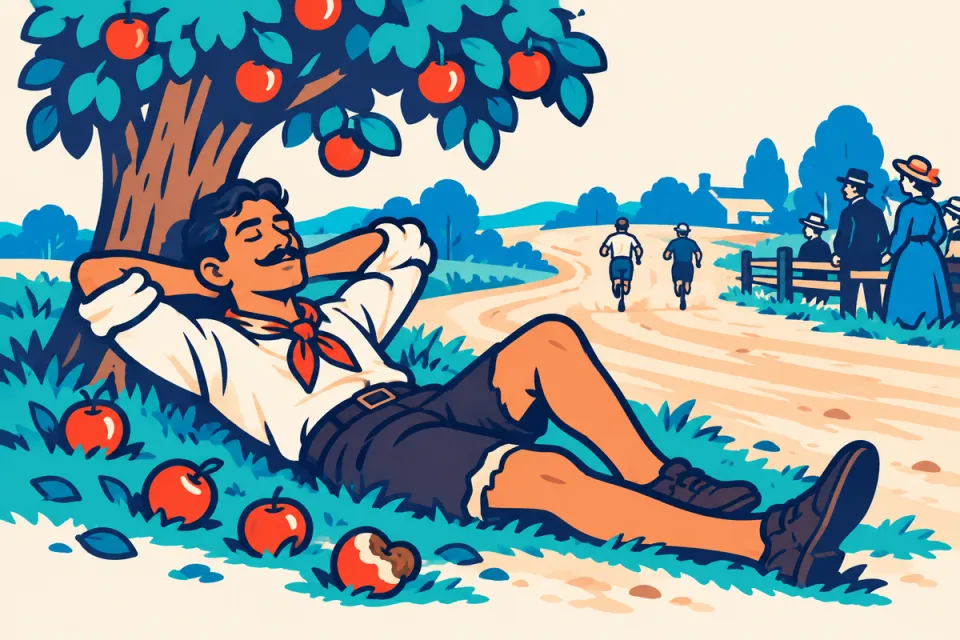
Later he stopped at an orchard and ate some apples. They were rotten. His stomach hurt so badly that he lay down and took a nap.
Then he got up and kept going. He still finished fourth in the Olympic marathon. Today, in Cuba, he is often called the man who inspired the founding of organized athletics on the island.
299 words · about 1 min to read · retell it in about 2 minutes
In the summer of 1904, a small Cuban mailman named Félix Carvajal set out to run the Olympic marathon in St. Louis. Back home he was a legend for his endurance. People called him The Walker, and he had once crossed the full length of Cuba on foot. He raised the money for the trip by running exhibitions around the island.
Then, on the way, he stopped in New Orleans and lost all of it gambling. Most people would have turned back. Carvajal hitchhiked and walked the rest of the way to St. Louis.
He reached the start line just in time, wearing the only clothes he had: a long-sleeved shirt, long trousers and street shoes. He hastily cut the legs of his trousers short to make them look like shorts.
The race was a disaster for almost everyone. It was hot, the roads were thick with dust, and there was only one official place to get water. Thirty-two men started. Only fourteen finished.
Carvajal ran in his own way. He stopped to chat with spectators in broken English. He had not eaten for forty hours, so when he spotted people in a car eating peaches, he asked for one. They refused, so he playfully snatched two and ate them as he ran. Later he found an apple orchard and helped himself. The apples were rotten. Struck by stomach cramps, he lay down and took a nap.
And then he got up and finished fourth.
The official report of the Games said that if anyone had been helping him, he would not only have won, but would have lowered the Olympic record. Instead, he had done it alone, hungry, in cut-off trousers. In Cuba, he is still spoken of as the man who inspired the sport on the island.
465 words · about 2 min to read · retell it in about 4 minutes
On the afternoon of August 30, 1904, thirty-two men lined up in St. Louis for one of the strangest races in Olympic history. One of them did not look like a marathon runner at all. Félix Carvajal was a Cuban mailman, about five foot one, standing at the start in a long-sleeved white shirt, long dark trousers, a beret and a pair of street shoes.
Back in Cuba, Carvajal was a legend. People called him El Andarín, The Walker. He had once crossed the full length of the island, and he raised the money for this trip by putting on running demonstrations across Cuba. But on the way to St. Louis, he stopped in New Orleans and lost every cent, reportedly in a dice game. With nothing left, he walked and hitchhiked the rest of the way, and arrived just before the start with nothing but the clothes on his back. Other runners and officials helped him cut his trousers down to look more like shorts.
The race itself was a mess. The heat climbed into the low nineties, the roads were inches deep in dust, cars full of coaches and doctors kicked up clouds that set the runners coughing, and there was only one official spot to get fresh water, twelve miles out. Only fourteen men would finish.
Carvajal trotted along as if he were out for a stroll. Whenever he saw a crowd, he stopped to chat in broken English. He had not eaten in forty hours, so when he came across a car full of people eating peaches, he asked for one. They refused. He playfully snatched two and ate them as he ran. Further on, he wandered into an orchard and ate some apples. They turned out to be rotten. Struck by strong stomach cramps, he lay down and took a nap.
Meanwhile, the rest of the race was falling apart. The first man across the line, Fred Lorz, had ridden part of the way in a car and was disqualified. The real winner, Thomas Hicks, had been given strychnine and brandy by his trainers and had to be carried over the line.
And the napping Cuban? He woke up, kept going, and finished fourth.
The official report of the Games was clear about what might have been. “Had Carvajal had anyone with him – he was totally unattended – he would not only have won the race, but would have lowered the Olympic record.” According to the same report, his chatting alone may have cost him almost an hour.
Fourth place was not a victory, but it left a legacy. In Cuba, Carvajal is often spoken of as the inspiration for establishing athletics on the island. A broke, hungry mailman in cut-off trousers had shown a whole country what it could do.
Read it once, close the page, and tell it back. The coach listens for pace, fillers and the facts.
Key facts and sources
Carvajal was a Cuban mailman and long-distance runner who competed at the 1904 Olympics.
“was a Cuban mailman and long-distance runner who competed in the 1904 Summer Olympics” — Andarín Carvajal, Wikipedia
The 1904 Olympics were in St. Louis, Missouri.
“Carvajal traveled to the United States to compete in the Olympic marathon at the 1904 Summer Olympics in St. Louis, Missouri” — Andarín Carvajal, Wikipedia
He once made a journey across the full length of Cuba.
“including a journey across the full length of the island” — Andarín Carvajal, Wikipedia
He lost all his money gambling in New Orleans and had to hitchhike and walk to St. Louis.
“lost all of his money gambling in New Orleans, Louisiana and was forced to hitchhike and walk the rest of the way” — Andarín Carvajal, Wikipedia
He arrived in street clothes and cut around the legs of his trousers to make shorts.
“He arrived at the race dressed in street clothes and hastily cut around the legs of his trousers to make them more like shorts.” — Andarín Carvajal, Wikipedia
He stopped to chat with spectators.
“Carvajal performed well in the race despite stopping to chat with spectators” — Andarín Carvajal, Wikipedia
He had not eaten in 40 hours.
“Not having eaten in 40 hours” — Athletics at the 1904 Summer Olympics – Men's marathon, Wikipedia
He asked people in a car for peaches, was refused, and playfully snatched two and ate them as he ran.
“On one occasion, Carvajal stopped at a car, saw that its occupants were eating peaches, and asked for one. When the strangers refused, he playfully snatched two of the fruits and ate them as he ran.” — How the 1904 Marathon Became One of the Weirdest Olympic Events of All Time, Smithsonian Magazine
He ate apples from an orchard that turned out to be rotten.
“Later in the race he saw an apple orchard and stopped to eat some apples which turned out to be rotten.” — Andarín Carvajal, Wikipedia
He suffered stomach cramps and lay down and took a nap.
“Suffering from stomach cramps, he laid down and took a nap.” — How the 1904 Marathon Became One of the Weirdest Olympic Events of All Time, Smithsonian Magazine
He finished fourth.
“After stopping to nap and recover, Carvajal rallied to finish fourth.” — Andarín Carvajal, Wikipedia
He is often spoken of as the inspiration for establishing athletics in Cuba.
“the man who is often spoken of as being inspiration for establishing the sport on the island was a humble mailman called Felix Carvajal” — Inspired by Carvajal, Cuba's federation celebrates its centenary, World Athletics
He was nicknamed El Andarin, The Walker.
“he picked up the nickname El Andarin, The Walker.” — Inspired by Carvajal, Cuba's federation celebrates its centenary, World Athletics
He raised money for the trip by demonstrating his running throughout Cuba.
“a Cuban national and former mailman who raised money to come to the United States by demonstrating his running prowess throughout Cuba, once trekking the length of the island” — How the 1904 Marathon Became One of the Weirdest Olympic Events of All Time, Smithsonian Magazine
He wore a long-sleeved shirt, long trousers and street shoes at the start.
“attired in a white, long-sleeved shirt; long, dark pants; a beret; and a pair of street shoes” — How the 1904 Marathon Became One of the Weirdest Olympic Events of All Time, Smithsonian Magazine
Other competitors and officials helped him cut his trousers.
“with the help of his fellow competitors and officials, he cut down he legs of his trousers to make them more like shorts” — Inspired by Carvajal, Cuba's federation celebrates its centenary, World Athletics
He arrived just before the start of the race.
“arriving just before the start of the race on 30 August” — Inspired by Carvajal, Cuba's federation celebrates its centenary, World Athletics
There was only one official water spot, 12 miles from the start.
“There was only one spot where athletes could officially secure fresh water, 12 miles from the start of the race.” — How the 1904 Marathon Became One of the Weirdest Olympic Events of All Time, Smithsonian Magazine
32 athletes competed and only 14 finished.
“while 32 athletes coming from seven nations (the United States, France, Cuba, Greece, the Orange River Colony, Great Britain, and Canada) competed, only 14 managed to complete the race” — Athletics at the 1904 Summer Olympics – Men's marathon, Wikipedia
He chatted in broken English.
“making good time even though he paused to chat with spectators in broken English” — How the 1904 Marathon Became One of the Weirdest Olympic Events of All Time, Smithsonian Magazine
The official report said that with anyone with him he would have won and lowered the Olympic record.
“Had Carvajal had anyone with him – he was totally unattended – he would not only have won the race, but would have lowered the Olympic record.” — Inspired by Carvajal, Cuba's federation celebrates its centenary, World Athletics
The race took place on August 30, 1904.
“took place on August 30 of that year” — Athletics at the 1904 Summer Olympics – Men's marathon, Wikipedia
He was about five foot one.
“A 5-foot-1 man” — How the 1904 Marathon Became One of the Weirdest Olympic Events of All Time, Smithsonian Magazine
He reportedly lost his money in a dice game.
“he reportedly lost all his money in a dice game and had to walk and hitchhike to St. Louis” — How the 1904 Marathon Became One of the Weirdest Olympic Events of All Time, Smithsonian Magazine
He arrived with just the clothes on his back.
“Having just the clothes on his back” — Inspired by Carvajal, Cuba's federation celebrates its centenary, World Athletics
Heat rose to the low 90s and the roads were inches deep in dust.
“Heat and humidity soared into the low 90s” — How the 1904 Marathon Became One of the Weirdest Olympic Events of All Time, Smithsonian Magazine
The course wound across roads inches deep in dust.
“wound across roads inches deep in dust” — How the 1904 Marathon Became One of the Weirdest Olympic Events of All Time, Smithsonian Magazine
Cars carrying coaches and physicians kicked up dust and caused coughing.
“Cars carrying coaches and physicians motored alongside the runners, kicking the dust up and launching coughing spells.” — How the 1904 Marathon Became One of the Weirdest Olympic Events of All Time, Smithsonian Magazine
Lorz was greeted as the winner but disqualified for riding in a car.
“While Frederick Lorz was greeted as the apparent winner, he was later disqualified as he had hitched a ride in a car for part of the race.” — Athletics at the 1904 Summer Olympics – Men's marathon, Wikipedia
Winner Thomas Hicks was given brandy, raw eggs and strychnine by his trainers.
“The actual winner, Thomas Hicks, was near collapse and hallucinating by the end of the race, a side effect of being administered brandy, raw eggs, and strychnine by his trainers.” — Athletics at the 1904 Summer Olympics – Men's marathon, Wikipedia
Hicks was carried over the line by his support team.
“his support team carried him over the line” — Athletics at the 1904 Summer Olympics – Men's marathon, Wikipedia
According to the official report, his chatting cost almost 60 minutes.
“Carvajal would stop to chat in broken English, and must have lost almost 60 minutes in time.” — Inspired by Carvajal, Cuba's federation celebrates its centenary, World Athletics
The race was in the afternoon (3:03 p.m. start).
“On August 30, at precisely 3:03 p.m.” — How the 1904 Marathon Became One of the Weirdest Olympic Events of All Time, Smithsonian Magazine
He found the apples in an orchard and lay down.
“Carvajal stopped and ate some apples which he found in an orchard, but which turned out to be rotten and caused him to have stomach cramps and forced him to lie down.” — Inspired by Carvajal, Cuba's federation celebrates its centenary, World Athletics
It was among the strangest races in Olympic history.
“How the 1904 Marathon Became One of the Weirdest Olympic Events of All Time” — How the 1904 Marathon Became One of the Weirdest Olympic Events of All Time, Smithsonian Magazine
He wore a long-sleeved shirt and long trousers in his exhibitions.
“which were usually performed in his work boots, long trousers, and long-sleeved shirt” — Inspired by Carvajal, Cuba's federation celebrates its centenary, World Athletics
Sources consulted for this story: Andarín Carvajal (Wikipedia, accessed 2026-10-25); Inspired by Carvajal, Cuba's federation celebrates its centenary (World Athletics, accessed 2026-10-25); How the 1904 Marathon Became One of the Weirdest Olympic Events of All Time (Smithsonian Magazine, accessed 2026-10-25); Athletics at the 1904 Summer Olympics – Men's marathon (Wikipedia, accessed 2026-10-25). Every story is checked against its sources before it is published — how we verify stories.
Why this story is worth telling
An underdog so cheerful and unlucky that the room will laugh, then cheer.