The King Who Wrote His Regret in Stone
The King Who Wrote His Regret in Stone
c. 260 BC (edicts deciphered 1837)Mauryan Empire, IndiaTurning points in history
An ancient Indian emperor won his greatest war, felt such remorse that he carved a public apology in stone.
Reading level
The same true story, told at three lengths. Pick one to read, close your eyes, and tell it back in your own words.
200 words · about 1 min to read · retell it in about 2 minutes
Long ago in India, a king named Ashoka ruled a huge empire. Eight years after he became king, his army attacked a land called Kalinga, on the east coast, and conquered it.
It was a victory. But it did not feel like one. Ashoka later had a message carved in stone, and in it he says he feels deep remorse for having conquered the Kalingas.
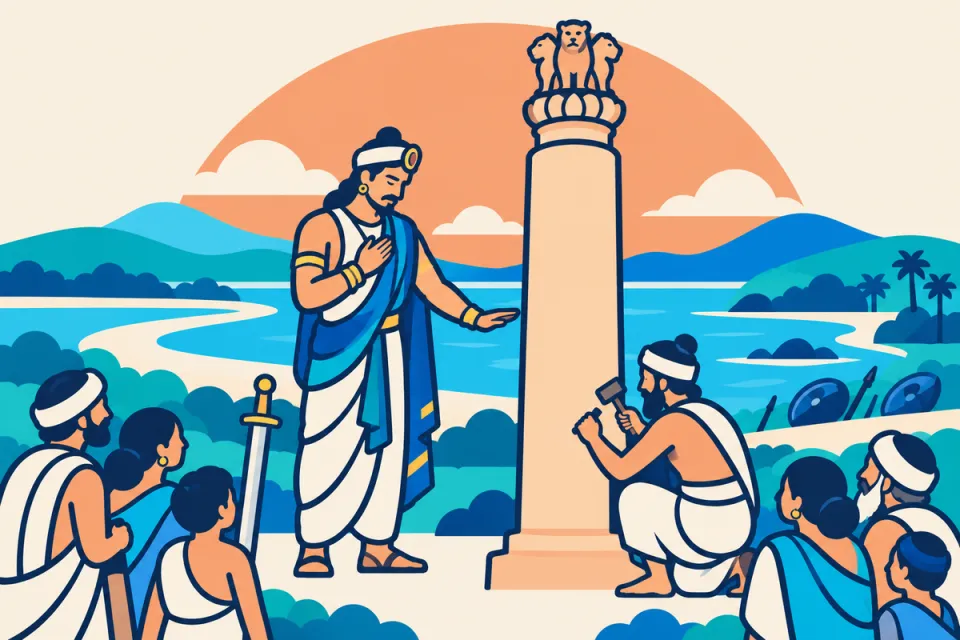
And he did something remarkable for a king: he said so, in public, in stone. He had messages carved on rocks and tall stone pillars across his empire. He wrote that the best conquest is not by war but by Dhamma, by goodness. And he wrote, “All men are my children.”
Then, slowly, the world forgot him. Old Buddhist books told stories about a cruel prince who became a kind and wise king. Scholars thought it was just a legend.
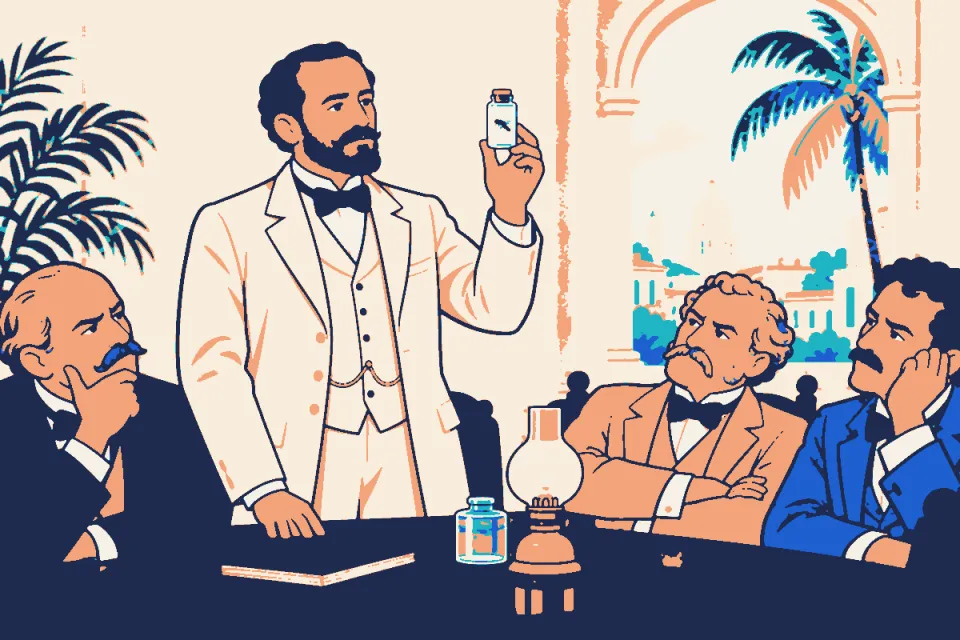
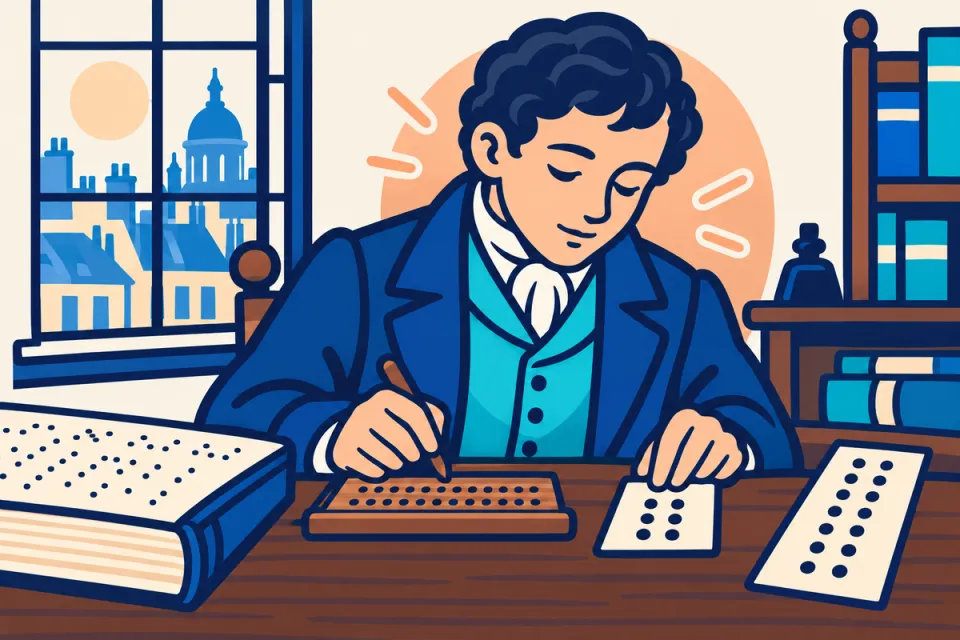
But in 1837, an East India Company official named James Prinsep finally read the strange writing on an old stone pillar in Delhi. It was a message from a king who called himself “Beloved-of-the-Gods.” In 1915, another stone was found, this one with the name Ashoka in it.
The king from the legends was real.
310 words · about 2 min to read · retell it in about 2 minutes
Imagine being the most powerful man in India and admitting, in writing, that you were wrong.
That is what Ashoka did. He was the third king of the Mauryan dynasty, ruling a vast empire. Eight years after his coronation, his armies conquered Kalinga, a kingdom on India’s east coast. By the numbers in his own edict, one hundred and fifty thousand were deported, one hundred thousand were killed, and many more died from other causes.
Most rulers would have built a victory monument. Ashoka carved a confession. In one of his edicts, he says he feels deep remorse for conquering the Kalingas, and that the killing, dying and deportation pain him deeply. From then on, he says, the best conquest of all is conquest by Dhamma, by moral goodness. To his officials he wrote, “All men are my children.”
His edicts were carved on rocks and polished stone pillars in more than thirty places across what is now India, Nepal, Pakistan and Afghanistan, though the confession itself appears on rocks at only a handful of them.
And then, history lost him. The script on the pillars became unreadable. Buddhist legends still told of a ruthless prince who became a just and gentle king, but European scholars treated it like any other too-good-to-be-true fairy tale.
Until 1837. That year, James Prinsep deciphered an inscription on a large stone pillar in Delhi. It was a series of royal edicts from a king who called himself “Beloved-of-the-Gods, King Piyadasi.” More inscriptions followed, and scholars began to wonder: could this be the Ashoka of the legends?
The proof came in 1915, when a British gold-mining engineer found an edict at Maski, in southern India, that used the name Ashoka itself.
The fairy-tale king was real. Almost forgotten for many centuries, one of the greatest men in history was known to the world once again.
498 words · about 2 min to read · retell it in about 4 minutes
In the third century BC, Ashoka ruled the Mauryan Empire, a vast realm in ancient India. Later Buddhist legends would paint him as cruel in his early years, though historians think those stories were exaggerated. In his own inscriptions, he says that in the eighth year of his reign his armies conquered Kalinga, a prosperous kingdom on the east coast, and that the conquest cost one hundred and fifty thousand deported and one hundred thousand killed, with many more dying from other causes.
What comes next is the thing people remember. The victory did not feel like a victory. In one of his edicts, Ashoka writes that when he had conquered the Kalingas, he came to feel a strong inclination towards the Dhamma, and that he now feels deep remorse for the conquest. He goes further, saying that he is pained by the killing, dying and deportation that take place when a country is conquered, and pained even more because good people of different faiths were hurt or separated from their loved ones.
Then he changes his idea of what winning means. He declares that conquest by Dhamma is the conquest he considers the best, and that even people who do wrong should be forgiven where forgiveness is possible. He calls all men his children, saying that what he wants for his own children, he wants for all people.
And he did not keep these thoughts to himself. He had his edicts carved into rocks and pillars in more than thirty places across India, Nepal, Pakistan and Afghanistan, most of them in Brahmi script; the remorse edict itself was cut into rock at only a handful of sites, and was left out of the inscriptions in Kalinga. The pillars were enormous, averaging forty to fifty feet high and weighing up to fifty tons, dragged sometimes hundreds of miles and polished until they shone like mirrors.
For centuries, the meaning of those inscriptions was lost. Then, in 1837, an East India Company official named James Prinsep deciphered the writing on a large stone pillar in Delhi. It proved to be a group of edicts from a king calling himself “Beloved-of-the-Gods, King Piyadasi.”
Scholars had heard of Ashoka from Buddhist legends, which described a cruel prince who had his brothers killed to seize the throne and who was then transformed into a merciful ruler. Nobody had taken the stories seriously. They were filed away with other tales of impossibly good kings.
Prinsep’s king matched the legend. More edicts turned up in the following decades, and the case was finally closed in 1915, when a rock edict was discovered at Maski that used the name Ashoka outright.
So the world got its proof that the remorseful Piyadasi of the stones and the Ashoka of the legends were the same man, and that his own words had outlasted him. A king who repented, and wrote it down, is remembered more than two thousand years later for the apology rather than the victory.
Read it once, close the page, and tell it back. The coach listens for pace, fillers and the facts.
Key facts and sources
Ashoka was the third king of the Mauryan dynasty and became king after his father Bindusara.
“he was born in about 304 B.C. and became the third king of the Mauryan dynasty after the death of his father, Bindusara.” — The Edicts of King Asoka (S. Dhammika translation), Buddhist Publication Society / Britannica
Eight years after his coronation, Ashoka’s armies attacked and conquered Kalinga.
“In 262 B.C., eight years after his coronation, Asoka’s armies attacked and conquered Kalinga, a country that roughly corresponds to the modern state of Orissa.” — The Edicts of King Asoka (S. Dhammika translation), Buddhist Publication Society / Britannica
Kalinga was on the east coast (roughly modern Odisha).
“an independent feudal kingdom located on the east coast, in the present-day state of Odisha” — Kalinga War, Wikipedia
Edict 13 gives the numbers: 150,000 deported, 100,000 killed, many more died.
“One hundred and fifty thousand were deported, one hundred thousand were killed and many more died (from other causes).” — The Edicts of King Asoka (S. Dhammika translation), Buddhist Publication Society / Britannica
The conquest was in the eighth year of his reign.
“Beloved-of-the-Gods, King Piyadasi, conquered the Kalingas eight years after his coronation.” — The Edicts of King Asoka (S. Dhammika translation), Buddhist Publication Society / Britannica
After the conquest Ashoka felt strong inclination to Dhamma and now feels deep remorse.
“After the Kalingas had been conquered, Beloved-of-the-Gods came to feel a strong inclination towards the Dhamma, a love for the Dhamma and for instruction in Dhamma. Now Beloved-of-the-Gods feels deep remorse for having conquered the Kalingas.” — The Edicts of King Asoka (S. Dhammika translation), Buddhist Publication Society / Britannica
He is pained by killing, dying and deportation in conquest.
“Indeed, Beloved-of-the-Gods is deeply pained by the killing, dying and deportation that take place when an unconquered country is conquered.” — The Edicts of King Asoka (S. Dhammika translation), Buddhist Publication Society / Britannica
He is pained even more that good people of different religions were injured or separated from loved ones.
“pained even more by this -- that Brahmans, ascetics, and householders of different religions who live in those countries, and who are respectful to superiors, to mother and father, to elders, and who behave properly and have strong loyalty towards friends, acquaintances, companions, relatives, servants and employees -- that they are injured, killed or separated from their loved ones.” — The Edicts of King Asoka (S. Dhammika translation), Buddhist Publication Society / Britannica
Conquest by Dhamma is the best conquest.
“Now it is conquest by Dhamma that Beloved-of-the-Gods considers to be the best conquest.” — The Edicts of King Asoka (S. Dhammika translation), Buddhist Publication Society / Britannica
Even wrongdoers should be forgiven where possible.
“Now Beloved-of-the-Gods thinks that even those who do wrong should be forgiven where forgiveness is possible.” — The Edicts of King Asoka (S. Dhammika translation), Buddhist Publication Society / Britannica
‘All men are my children’ — what he desires for his own children he desires for all men.
“All men are my children. What I desire for my own children, and I desire their welfare and happiness both in this world and the next, that I desire for all men.” — The Edicts of King Asoka (S. Dhammika translation), Buddhist Publication Society / Britannica
Edicts are in more than thirty places across India, Nepal, Pakistan and Afghanistan.
“Asoka’s edicts are to be found scattered in more than thirty places throughout India, Nepal, Pakistan and Afghanistan.” — The Edicts of King Asoka (S. Dhammika translation), Buddhist Publication Society / Britannica
Pillars averaged 40–50 feet and weighed up to fifty tons, dragged hundreds of miles.
“Averaging between forty and fifty feet in height, and weighing up to fifty tons each, all the pillars were quarried at Chunar, just south of Varanasi and dragged, sometimes hundreds of miles, to where they were erected.” — The Edicts of King Asoka (S. Dhammika translation), Buddhist Publication Society / Britannica
Pillars had mirror-like polish.
“Both the pillars and the capitals exhibit a remarkable mirror-like polish” — The Edicts of King Asoka (S. Dhammika translation), Buddhist Publication Society / Britannica
Most edicts written in Brahmi script so they could be widely read.
“Most of them are written in Brahmi script from which all Indian scripts and many of those used in Southeast Asia later developed.” — The Edicts of King Asoka (S. Dhammika translation), Buddhist Publication Society / Britannica
In 1837 James Prinsep deciphered an inscription on a large stone pillar in Delhi.
“But in 1837, James Prinsep succeeded in deciphering an ancient inscription on a large stone pillar in Delhi.” — The Edicts of King Asoka (S. Dhammika translation), Buddhist Publication Society / Britannica
Prinsep’s inscription proved edicts by a king calling himself ‘Beloved-of-the-Gods, King Piyadasi’.
“Prinsep’s inscription proved to be a series of edicts issued by a king calling himself “Beloved-of-the-Gods, King Piyadasi.”” — The Edicts of King Asoka (S. Dhammika translation), Buddhist Publication Society / Britannica
Stories about Ashoka were found in the Divyavadana, Asokavadana, Mahavamsa; assumed legend.
“Stories about this king, similar in outline but differing greatly in details, were found in the Divyavadana, the Asokavadana, the Mahavamsa and several other works.” — The Edicts of King Asoka (S. Dhammika translation), Buddhist Publication Society / Britannica
Legends told of an exceptionally cruel prince who had many brothers killed to seize the throne, converted, ruled wisely.
“They told of an exceptionally cruel and ruthless prince who had many of his brothers killed in order to seize the throne, who was dramatically converted to Buddhism and who ruled wisely and justly for the rest of his life.” — The Edicts of King Asoka (S. Dhammika translation), Buddhist Publication Society / Britannica
None of the stories were taken seriously; assumed legend like other ‘too good to be true’ kings.
“None of these stories were taken seriously -- after all many pre-modern cultures had legends about “too good to be true” kings who had ruled righteously in the past and who, people hoped, would rule again soon.” — The Edicts of King Asoka (S. Dhammika translation), Buddhist Publication Society / Britannica
Identification confirmed in 1915 when an edict naming Asoka was discovered.
“However, it was not until 1915, when another edict actually mentioning the name Asoka was discovered, that the identification was confirmed.” — The Edicts of King Asoka (S. Dhammika translation), Buddhist Publication Society / Britannica
The 1915 Maski find was by C. Beadon, a British gold-mining engineer.
“The identification of Devanampiya with Ashoka was confirmed by an inscription discovered in 1915 by C. Beadon, a British gold-mining engineer, at Maski, a town in Madras Presidency (present day Raichur district, Karnataka).” — Edicts of Ashoka, Wikipedia
After being forgotten nearly 700 years he became known again.
“Having been forgotten for nearly 700 years, one of the greatest men in history became known to the world once again.” — The Edicts of King Asoka (S. Dhammika translation), Buddhist Publication Society / Britannica
Ashoka’s Mauryan Empire was vast; he ruled ancient India.
“But after the war Asoka dedicated the rest of his life trying to apply Buddhist principles to the administration of his vast empire.” — The Edicts of King Asoka (S. Dhammika translation), Buddhist Publication Society / Britannica
James Prinsep was an archaeologist, philologist and official of the East India Company.
“James Prinsep, an archaeologist, philologist, and official of the East India Company” — Edicts of Ashoka, Wikipedia
Sources consulted for this story: The Edicts of King Asoka (S. Dhammika translation) (Buddhist Publication Society / Britannica, accessed 2026-10-25); Edicts of Ashoka (Wikipedia, accessed 2026-10-25); Kalinga War (Wikipedia, accessed 2026-10-25). Every story is checked against its sources before it is published — how we verify stories.
Why this story is worth telling
The mightiest proof of change is saying sorry when everyone expects a victory lap.