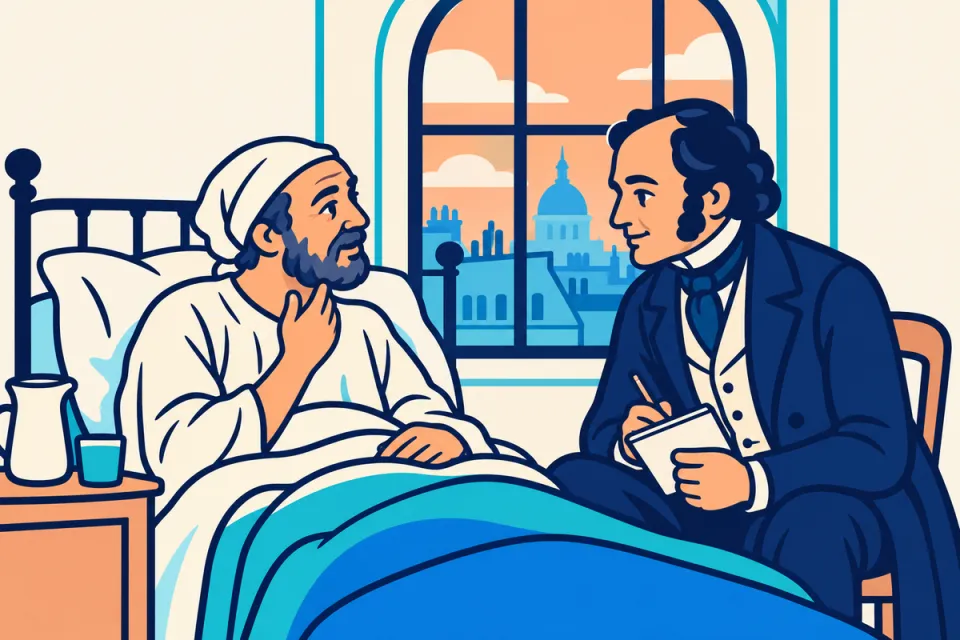
The Town That Takes In Strangers
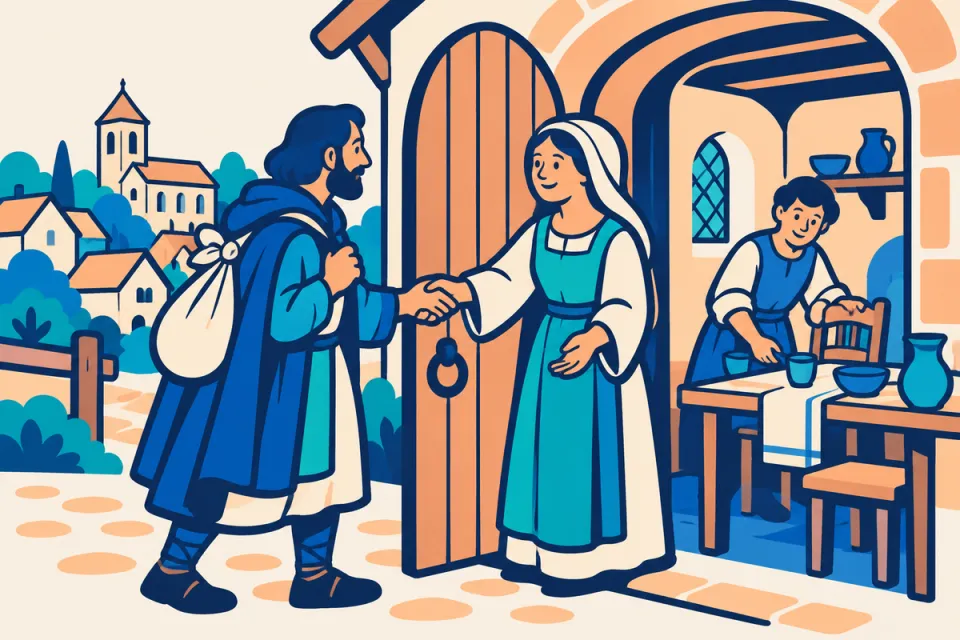
The Town That Takes In Strangers
13th century – ongoingGeel, BelgiumMind & behavior
For 700 years one Belgian town has done what the rest of the world would not: take people with mental illness into its families.
Reading level
The same true story, told at three lengths. Pick one to read, close your eyes, and tell it back in your own words.
214 words · about 1 min to read · retell it in about 2 minutes
In Belgium there is a small town called Geel. For more than seven hundred years, its families have done something amazing. They welcome strangers with mental illness into their homes. Not for a night. For years, sometimes for life.
How did it start? The town tells a story about Dymphna, an Irish princess from long ago. She fled to Geel, the story says, and her mad father found her and killed her there. People began to visit her grave, hoping for cures. Too many pilgrims came, and the church could not house them all. So local families simply took them in. The guests stayed, and the custom stayed too.
The people who come are not called patients. They are called guests or boarders. They help in the house, they walk the town, they join the family.
One family told a reporter about a boarder who was afraid of lions coming out of the walls. So the host, Toni, pretended to chase the lions away. And that worked, every time.
At its peak, the town cared for thousands of guests. Today there are still hundreds. The world built big hospitals. Geel kept its old idea: a person with a troubled mind still needs a home, a table, and people who expect nothing strange about them.
366 words · about 2 min to read · retell it in about 3 minutes
There is a town in Belgium, an hour from Antwerp, that runs on an idea the rest of the world finds hard to believe. In Geel, families take people with severe mental illness into their homes. They have been doing it for over seven hundred years.
The people who come are not called patients. In Geel they are called guests, or boarders. They join a household, help with the dishes, walk the dog, go to the shop, and share the family’s life for years, often decades.
It started, so the story goes, with a princess. According to legend, Dymphna was a seventh-century Irish princess who fled to Geel to escape her maddened father. He found her and killed her there. She became the patron saint of the mentally ill, and pilgrims crossed Europe to pray at her shrine, bringing sick relatives in the hope of finding relief from their mental distress. By 1480 the town had built a hospice beside the church, but it overflowed. Some families simply went home and left their relatives behind. So, as the historian Mike Jay puts it, local people began taking them in as guests or boarders.
The custom never stopped. A visiting French doctor described it in 1862 as an extraordinary thing: hundreds of mentally ill people walking freely around a town that tolerated them without fear. A Scottish psychiatrist wrote in 1861 of the general contentment of the patients. Other visitors found that, by and large, people in Geel were happy. At the program’s peak, just before the Second World War, nearly four thousand boarders lived in Geel, by one account a quarter of the town’s population.
It is not a miracle cure, and there were dark chapters; some families once kept difficult boarders chained. But the idea endured, studied and debated by psychiatrists. One host family explained their method simply: when a boarder saw lions coming out of the walls, one of the hosts pretended to chase the lions away. That worked every time, she said.
Today a couple hundred boarders remain, some staying with host families for more than twenty years. One medical journal called it radical kindness. One Geel host simply calls it normal life.
523 words · about 3 min to read · retell it in about 4 minutes
An hour’s drive from Antwerp there is a town where the stranger at the kitchen table is an institution seven hundred years old. In Geel, Belgium, families take strangers with severe mental illness into their homes, and keep them there not for weeks but for years, sometimes for life.
The roots are legend, and the legend is dark. Dymphna, a seventh-century Irish princess, is said to have fled to Geel to escape her maddened father; he tracked her down and murdered her in the town. She became the patron saint of the mentally ill, and her shrine made Geel a destination for desperate families across Europe, people bringing loved ones in the hope of relief from their mental distress. By 1480 the town had built a hospice beside the church. It was not enough. “Sometimes the families would return home and leave their uncured relatives in the hospice,” says the historian Mike Jay. “So local people began taking them in as guests or boarders, as they call them.”
That improvisation hardened into an institution unlike any other. Most boarders in Geel were not inmates. They shared work on the farms, sat at the family table, and walked the town freely. In 1862 a visiting French doctor described “the extraordinary phenomenon presented at Geel of 400 insane persons moving freely about in the midst of a population which tolerates them without fear and without emotion.” A Scottish psychiatrist, John Sibbald, noted in 1861 the general contentment of the patients. Not everyone was a believer. Geel became a polarizing example in psychiatry, dismissed by some as a sad remnant of medieval culture where people toiled in the fields without therapy, and there were real failures: some families, Jay says, resorted to chaining difficult boarders. In 1852 the state took over and placed the system under medical direction, and the model outlasted the nineteenth century’s faith in large asylums.
At the program’s peak, on the eve of the Second World War, nearly four thousand boarders lived among Geel’s townspeople, by one account roughly a quarter of the population. Today the number is far smaller, 205 by a 2018 count, and the guests still come through the town’s psychiatric hospital for evaluation before a family is matched. Hosts get a stipend and professional support, though accounts differ on whether they receive formal training. One veteran host family described their approach to a boarder who suffered visions of lions coming through the walls: the host, Toni Smit, pretended to chase the lions away, and that, she said, worked every time.
Researchers have mined Geel for its lessons. The guests take less medication, they hold small responsibilities, they are needed and wanted rather than managed. In 2014, the majority had lived with their families for more than twenty years. A medical journal called the town’s ethos radical kindness.
Geel is not a utopia, and it is shrinking fast. But stand in its market square and you are standing in the longest-running mental health experiment in the Western world, one that began with the legend of a murdered princess and a town that, instead of building walls, pulled up chairs.
Read it once, close the page, and tell it back. The coach listens for pace, fillers and the facts.
Key facts and sources
For over 700 years, residents of Geel have accepted people with mental disorders into their homes.
“For over 700 years, residents of Geel have been accepting people with mental disorders, often very severe mental disorders, into their homes and caring for them.” — For Centuries, A Small Town Has Embraced Strangers With Mental Illness, NPR
Geel is known for early adoption of de-institutionalization based on placement in host families.
“Geel is well known for the early adoption of de-institutionalization in psychiatric care. This practice is based on the positive effects that placement in a host family gives the patient” — Geel, Wikipedia
According to legend, Dymphna was a 7th-century Irish princess who fled to Geel from a maddened father.
“According to legend, Dymphna was a 7th-century Irish princess who fled to Geel from a maddened father and devoted her life to serving the mentally disabled.” — For Centuries, A Small Town Has Embraced Strangers With Mental Illness, NPR
Her father discovered her location and traveled to Geel to behead her.
“But she became a martyr when her father discovered her location and traveled to Geel to behead her.” — For Centuries, A Small Town Has Embraced Strangers With Mental Illness, NPR
By 1480 the town had built a small hospice beside the church, which the pilgrims overwhelmed.
“By 1480, the town had built a small hospice on the side of the church to accommodate pilgrims, but the shrine became so popular that the pilgrims overwhelmed the annex’s capacity.” — For Centuries, A Small Town Has Embraced Strangers With Mental Illness, NPR
Families sometimes left uncured relatives in the hospice, and local people began taking them in as guests or boarders.
““So local people began taking them in as guests or boarders, as they call them.”” — For Centuries, A Small Town Has Embraced Strangers With Mental Illness, NPR
The people are not called patients but guests or boarders.
“It isn’t meant to be a treatment or therapy. The people are not called patients, but guests or boarders.” — For Centuries, A Small Town Has Embraced Strangers With Mental Illness, NPR
One boarder struggled to sleep because he saw lions coming out of the walls.
“another used to struggle to sleep because he saw lions coming out of the walls.” — For Centuries, A Small Town Has Embraced Strangers With Mental Illness, NPR
The hosts pretended to chase the lions away, and that worked every time.
“Smit would pretend to chase the lions away. “And that would work every time,” Smit says.” — For Centuries, A Small Town Has Embraced Strangers With Mental Illness, NPR
At the program’s peak in 1930, about 4,000 boarders resided in Geel, a quarter of the town’s population.
“At the program’s peak in 1930, about 4,000 boarders resided in Geel — a quarter of the town’s population.” — For Centuries, A Small Town Has Embraced Strangers With Mental Illness, NPR
Today there are about 250 boarders in Geel.
“Today, there are about 250 boarders in Geel.” — For Centuries, A Small Town Has Embraced Strangers With Mental Illness, NPR
In 2014 the majority of patients had been in family foster care for more than 20 years.
“in 2014 the majority of the patients had been in family foster care for more than 20 years” — Lessons to be learned from the oldest community psychiatric service in the world: Geel in Belgium, BJPsych Bulletin (PubMed Central)
In 1862 a visiting French doctor described 400 insane persons moving freely among a population that tolerated them without fear.
““the extraordinary phenomenon presented at Geel of 400 insane persons moving freely about in the midst of a population which tolerates them without fear and without emotion.”” — For Centuries, A Small Town Has Embraced Strangers With Mental Illness, NPR
In 1861 Scottish psychiatrist John Sibbald wrote of the general contentment manifested by the insane.
““One of the agreeable features is the general contentment manifested by the insane,” wrote John Sibbald, a Scottish psychiatrist, in 1861.” — For Centuries, A Small Town Has Embraced Strangers With Mental Illness, NPR
Some families would resort to keeping difficult boarders chained or restrained.
“then some of the families would resort to keeping them chained or restrained.” — For Centuries, A Small Town Has Embraced Strangers With Mental Illness, NPR
Dymphna became the patron saint of the mentally ill, and pilgrims hoped for cures at her tomb.
“Miraculous cures were reported to occur in Geel.” — Lessons to be learned from the oldest community psychiatric service in the world: Geel in Belgium, BJPsych Bulletin (PubMed Central)
In the 19th century a central medical establishment was set up providing standard care to boarders.
“In the 19th century, a central medical establishment was set up that provided standard medical and psychiatric care to boarders and other residents.” — For Centuries, A Small Town Has Embraced Strangers With Mental Illness, NPR
Hosts receive a stipend from the Belgian government, plus training and support from psychiatric professionals.
“receive a stipend from the Belgian government for taking care of Ennekans, as well as training and support from psychiatric professionals.” — For Centuries, A Small Town Has Embraced Strangers With Mental Illness, NPR
Since the year 600, so the story goes, and certainly since the 13th century, Geel has been a haven for those with mental illness.
“Since the year 600, so the story goes, and certainly since the 13th century, Geel has been a haven for those with mental illness.” — Lessons to be learned from the oldest community psychiatric service in the world: Geel in Belgium, BJPsych Bulletin (PubMed Central)
Early psychiatrists noted the treatment prescribed was no treatment at all: to simply live with the patients.
“the treatment prescribed for mental patients was, in fact, no treatment at all.” — For Centuries, A Small Town Has Embraced Strangers With Mental Illness, NPR
Vincent van Gogh’s father considered sending his son to Geel in 1880.
“Vincent van Gogh’s father considered sending his famous son to Geel in 1880.” — Geel, Wikipedia
Geel is less than an hour’s drive from Antwerp.
“a charming Belgian town less than an hour’s drive from of Antwerp” — For Centuries, A Small Town Has Embraced Strangers With Mental Illness, NPR
Some observers doubt there is enough evidence that the scheme works.
“For some observers, there is not enough evidence that the scheme really works.” — 'Care BnB' - the town where mentally ill people lodge with locals, The Guardian
The custom has been shrinking; the number of boarders has fallen to roughly 250, less than 7 percent of its prewar peak.
“But the centuries-old custom has been shrinking. The number of boarders has fallen to roughly 250 today, less than 7 percent of its prewar peak.” — For Centuries, A Small Town Has Embraced Strangers With Mental Illness, NPR
By and large, people in Geel were happy, early observers noted.
“By and large, people in Geel were happy.” — For Centuries, A Small Town Has Embraced Strangers With Mental Illness, NPR
Guests go first to a public psychiatric hospital in Geel for evaluation, then are paired with a household.
“Ennekans first went to a public psychiatric hospital in Geel that manages the boarder program. Ennekans saw medical professionals and received treatment and an evaluation. Then he was paired with a household.” — For Centuries, A Small Town Has Embraced Strangers With Mental Illness, NPR
Many Geel residents were farmers, and boarders offered a source of labour.
“Many Geel residents were farmers, and boarders offered a source of labor.” — For Centuries, A Small Town Has Embraced Strangers With Mental Illness, NPR
Sources consulted for this story: Geel (Wikipedia, accessed 2026-10-25); For Centuries, A Small Town Has Embraced Strangers With Mental Illness (NPR, accessed 2026-10-25); Lessons to be learned from the oldest community psychiatric service in the world: Geel in Belgium (BJPsych Bulletin (PubMed Central), accessed 2026-10-25); 'Care BnB' - the town where mentally ill people lodge with locals (The Guardian, accessed 2026-10-25). Every story is checked against its sources before it is published — how we verify stories.
Why this story is worth telling
A tradition born from a saint’s legend became the oldest community mental health program in the Western world.